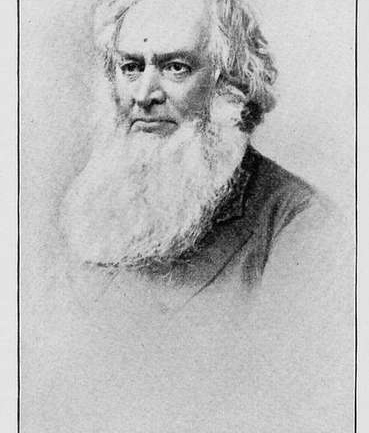
This essay was originally published in the 1944 OCHS Yearbook. Please note that this essay was published over 80 years ago. While still useful for general education, language may be outdated and at times offensive. The Oswego County Historical Society does not stand by the language used in this essay. All photos were added in 2026 when this article was uploaded to the web. To view the original document, please visit NYHeritage.org.
Paper Read Before the Oswego County Historical Society at Oswego, January 11, 1944, by Dr. W. Seward Salisbury of the Faculty of the Oswego State Teachers College.
The chief purpose of this paper is to describe the part which Colonel Bradstreet played in the colonial wars with special reference to the expedition leading to the capture of Fort Frontenac. The significance of the Bradstreet expedition can best be appreciated when seen in the background of the developments of the colonial wars.
The great struggle of the Eighteenth Century revolved around the efforts of the British and French to achieve world empire supremacy. The most important colonial battleground was in North America. Control of the frontiers and communication routes of the Colony of New York was the leading strategy of both combatants. In New York there was no more vital spot than Oswego.
Iroquois Held Balance Of Power
It is a common generalization in history to assume that the initial alliance of Champlain with the Algonquins against the Iroquois made the Iroquois permanent and wholehearted allies of the English. This did not hold true during the colonial wars.
After the first colonial war—Queen Anne’s—the Iroquois were no longer attached to the English cause. The Confederacy became divided into English and French factions. The Iroquois held the balance of power. They consistently followed what would today be called a “realistic” foreign policy. The Indians were much impressed with success and above all wished to be on the winning side. Whenever the English achieved a military success or a striking show of force, they could depend on a substantial number of Iroquois warriors as allies. Similarly whenever the English appeared weak and ineffectual or suffered a serious reverse, warrior-allies for the English would be either few in number or altogether lacking.
The English labored under a further disability in their relations to the Iroquois. Although New York was one of the smaller colonies in population, even the limited extension of settlers into the Mohawk Valley tended to alienate the Iroquois. The French were in no sense a competitor for Iroquois homelands.
English Distrusted “Colonials”
All during the colonial wars, the distrust and lack of understanding between the English officers on the one hand and the colonial officers and provincial troops on the other was a serious deterrent to effective military operations. Neither the overwhelming numbers of the combined English forces nor the peculiar abilities of provincial troops were consistently used to their respective advantages.
When Pitt came into power in the English government at London he procured a change in regulations concerning the relative rank of British and provincial officers, putting them in a position much nearer equality. While this appeased the provincials and made for more effective prosecution of the various campaigns, the English officers were considerably annoyed. Parkman reports that not a single provincial colonel was asked to join in a Council of War until the end of the major campaigns. On several occasions Colonel Bradstreet believed he suffered discrimination in regard to promotions; at other times, he felt that his military talents and judgment were not properly recognized. However, Wolfe, who in general was a severe critic of American officers and troops, singled Bradstreet out for praise.
Early Colonial Wars
The struggle in North America began as a struggle for the control of the Indian trade. Albany and Montreal were the principal fur-trading centers. English goods competing for the Indian trade were cheaper than French goods. Albany possessed this advantage over Montreal.
The French maintained that everything north and west of the watershed separating the Atlantic from the St. Lawrence, the Lakes, and the Mississippi was French territory. They gave substance to this contention by establishing forts and trading posts at Niagara and Crown Point.
The English were unwilling to let this move go unchallenged. Governor Burnett succeeded in establishing at Oswego in 1727 a fort to protect the trading post established five years earlier. The English further hoped to settle Irondequoit, build armed boats and in event of war take Forts Niagara and Frontenac.
William Shirley, governor of Massachusetts, was the outstanding English figure during King George’s war, 1744-1748. He wished to unite all the northern colonies against the French. The majority of New Yorkers would have preferred to remain neutral.
The Assembly was under the influence of the Albany traders who would maintain at Oswego and elsewhere a more extensive and profitable Indian trade under a policy of neutrality. The capture of Saratoga by the French and Indians shook New York out of its complacency.
The great English success was the capture of Louisburg. Bradstreet played an important part in this campaign. He had been captured by Du Vivier in 1744 and imprisoned at Louisburg. He was later exchanged and returned to New England where he became an ardent advocate of an expedition against Louisburg. He maintained he would have held the first command of the Louisburg expedition if he had been a New Englander. He was in fact only the second colonel of the First Massachusetts Troop (York Provincials).
The expedition that was sent to take Crown Point failed to push the attack even though General William Johnson had persuaded the Iroquois to take up the hatchet on behalf of the English. By the Treaty of Aix-la-Chapelle, 1748, Louisburg was restored to the French.
Oswego Garrison Unsupplied
During the following ten years the French were everywhere aggressive and successful. The English fortunes hit a new low. Their leadership was poor and inept. Each colony thought and acted only in terms of its own interests. Immediately following the peace
of 1748, the French built up a line of forts along the frontier. The construction of these forts made the Iroquois lukewarm in their English alliance. Trade at Oswego declined. For two successive years the New York Assembly failed to pass any bill to supply a garrison at Oswego or to purchase presents for the Iroquois. In 1751 Sir William Johnson resigned in disgust at the failure of the Assembly to reimburse him for money which he had advanced as Indian agent. The year 1752 witnessed a mutiny of the garrison at Oswego.
A Colden* report at this time called for an Indian superintendent to be appointed by the English government, and additional forts on the northern and western frontier of New York at the joint expense of all the colonies. A chief purpose of the Albany Conference of 1754 was to renew the alliance with the Iroquois. The Iroquois representatives replied by taunting the Conference on the defenseless frontiers. **
*Governor Cadwallader Colden of the Colony of New York.
**In 1755 the defenses at Oswego were strengthened by the erection of two more forts, Fort Ontario on the East side of the river, about on the same site as the modern Fort of today, and Fort George which stood at the northern end of the ground today known as Montcalm Park. As the work was not completed in 1755 further work was done on both new forts the next year.
French And Indian War
The French and Indian War was formally declared on the continent in 1756. Fighting in the New World had actually broken out in 1754. The English finally awoke to the seriousness of their position and provided for a unified campaign and an overall plan of campaign. General Braddock was appointed commander in chief and Johnson superintendent of Indian affairs for all colonies. The main attack was to be made against Fort Du Quesne although DeLancey and Shirley believed that the taking of Niagara and cutting of communications to the Ohio and Mississippi valleys warranted primary attention. Shirley at Oswego was in charge of operations against Niagara and Johnson of operations against Crown Point. Friction developed between Shirley, who succeeded Braddock as commander in chief, and Johnson. Johnson failed to take Crown Point and could only show a defensive victory at Fort WilliamHenry. Shirley marched to Oswego but with the French strong at both Forts Niagara and Frontenac and commanding the Lake did not dare risk an expedition against Niagara.
French Attack Ship Carpenters
In 1756 the French were active in many directions; most of their operations having a bearing upon their intended capture of Oswego. The forts at Niagara and Frontenac were much strengthened and their garrisons changed. One French detachment from Niagara approached Oswego on the 10th of May. It attacked a party of ship carpenters at work constructing an English fleet within 300 yards of the Oswego fort, killing nine and capturing three. The detachment escaped with such speed the attempted pursuit was fruitless. Fort Bull at the Oneida carrying place had already been surprised, captured and burned to the ground.
Col. Bradstreet by heroic exertions brought in from Schenectady a convoy of much needed supplies which reached Oswego July 1. The supplies included 16 large guns and 16 swivels for the war vessels then building at Oswego. Another large group of ship carpenters, many of them from New England, had accompanied Bradstreet on the advance from Albany.
Bradstreet with his batteaux men started back for Albany July 3, with his party in three divisions. He instructed them to keep as close to each other as possible, but the uncertainty of the progress against the swift current of the river separated them considerably. Bradstreet was near the head of the command, when a point about two miles above the site of Minetto was reached. The Indian war cry rang out from the east bank of the river followed by a volley of rifles. Several men fell dead or wounded. DeVilliers had ambushed the party with a large body of Canadians and Indians.
Battle Island Fight
Bradstreet ordered the main body of his troops to land on the western bank of the river. With a small body of men, including Captain Philip Schuyler, who later became famous as a general during the Revolution, he rowed to a small island* a little above the point of attack. The Indians rushed through the water to attack the band on the Island. They were beaten off. DeVilliers then attacked the island at the head of fifty of his Canadians. They were also beaten off with casualties although they did take some prisoners before retiring.
*The island is today known from this incident as Battle Island.
Fight at Battle Island
DeVilliers left part of his force on the east bank to harass the English, but moved with his main body a mile up the river. He crossed here intending to attack Bradstreet from the rear. Bradstreet anticipated this attack, withdrew his men from the island, and advanced with 250 men to meet DeVilliers. He left Captain John Butler, who later became the celebrated Tory leader during the Revolution, to guard the batteaux with a few men.
The two forces met in a second major engagement in and around the pine swamp at the junction of the river with the outlet of Lake Neahtawanta, on the west bank of the river. After two hours of severe fighting Bradstreet led his men directly into the swamp and drove the French and Indians across the river. The French and Indians took 26 scalps and a few prisoners. The English claimed more than 50 of the enemy killed, about as many prisoners, as well as a quantity of arms and blankets left by the French in their precipitate retreat. Bradstreet continued on to Albany arriving there the 10th of July.
Reinforcements Too Late
From the French prisoners it was learned by Bradstreet that Montcalm intended to attack Oswego. Bradstreet, Johnson, and Shirley did their utmost to get Lord Loudon, the new English commander in chief, to reinforce Oswego. Montcalm feinted at Crown Point, and Ticonderoga, returned to Montreal, and immediately left for Fort Frontenac (modern Kingston). With superb skill he gathered his forces, threw out in advance two parties to obscure the size and nature of his attacking force and appeared before Oswego with cannon heavy enough to reduce the works.* Montcalm captured the three forts and the English fleet at Oswego with relative ease considering the size of the respective forces.
Lord Loudon was finally convinced of the seriousness of the situation at Oswego. Too late he sent General Webb with reinforcements. Webb had progressed as far as the Oneida “Carrying place” (modern Rome) when he heard of the capture of Oswego. He burned the forts at the “carrying place” and retired to German Flats.
* The cannon were those which the French had captured from Braddock at the Battle of Fort DuQuesne.
Indians Seek Peace
In 1757, Loudon made the further mistake of withdrawing most of his force from the New York frontiers to attack Louisburg. Montcalm took advantage of this weakening of the frontier garrisons to capture Fort William Henry. The overwhelming successes of the French on the frontiers along with the destruction of the various English forts so impressed the Iroquois that all tribes except the Mohawks sent representatives to Montreal to negotiate for peace.
Bradstreet’s abilities were recognized in part when he was made aide-de-camp to Lord Loudon and put in charge of quartermaster duties for all English forces in America. As early as December, 1757, he volunteered to lead an expedition against Fort Frontenac. He even offered to bear part of the expense providing he were to be reimbursed and promoted if successful. Loudon gave the expedition his tentative approval, and Bradstreet entered with great zeal upon the construction of batteaux at Schenectady. He had 150 built by the latter part of May. However, the expedition was deferred in the face of greater events.
Pitt Seeks French Destruction
Sir William Pitt came into power in England and entered upon his office with the prime purpose of destroying France in America. He deployed the English fleet to prevent French reinforcements from arriving in New France, and sent more regulars to the colonies. He reformed the military set-up, putting the provincial officers and troops more nearly on the basis of equality with the English regulars. He recognized ability proven on the field of battle and promoted many deserving provincial officers. Bradstreet was rewarded with the permanent rank of lieutenant colonel, a rank for which he had long been working.
The grand plan for the campaign of 1758 called for the capture of Louisburg, Ticonderoga, and Du Quesne. General Abercrombie with 15,000 troops moved against Montcalm who had about half that number within strongly fortified Ticonderoga. Abercrombie made a frontal attack without proper preparation and was repulsed with the loss of 2000 men.* He retired to Fort William Henry. Amherst having taken Louisburg arrived with reinforcements but it was too late in the season to move against Ticonderoga. It was not until after the Ticonderoga defeat that the order was finally given to Bradstreet to proceed with his expedition as planned against Fort Frontenac.
* Among the regiments taking part in the English attack was the famous “Black Watch” which had just arrived in America from Scotland. This regiment, steady in the face of a withering fire from the French, advanced in close order thrice up the slope at the front of the works suffering among the heaviest losses ever known in the history of warfare up to that period. The following winter the remnants of this gallant clan were sent to Oswego to garrison the reconstructed Fort Ontario.
Capture of Fort Frontenac
Most of the following information is taken from “An Impartial Account of Lt. Colonel Bradstreet’s Expedition to Fort Frontenac”, originally published anonymously in England in 1759. In 1940 the original manuscript was edited and published by Professor E. C. Kyte, Queens University, Toronto, Canada. Historical research generally credits Colonel Bradstreet, himself, as the original author.
The troops which were to constitute the expeditionary force were gathered at Fort Craven, at the Oneida Carrying place. Fort Craven had been destroyed by the English at the loss of Oswego in 1756 and was rebuilt in the Spring of 1758.* On the 11th of August General Stanwix issued an order that the following troops be prepared to march with six days provisions by evening of the following day; the whole to be under the command of Colonel Bradstreet:
Regulars 155 Rangers 60 New Yorkers 1112 William’s (Boston Troops) 432 Doughtey’s (Massachusetts Bay Troops) 248 Rhode Islanders 318 Jersey’s 412 Batteaux men 270 Indians 42
Over 150 Indian warriors from the Five Nations had gathered at Oneida Station. Bradstreet hoped to enlist them for the expedition. He explained the proposed plan and promised booty and honor to all the warriors who would accompany him. Many of the chiefs tried to dissuade him from proceeding with the expedition. Only through the oratory and prestige of Red Head, an Onondaga Chief, were the 42 Indians finally enlisted in the expedition. Red Head had been mistreated by the French at LaGallette in 1755. He had come to Oswego and been well received and showered with presents by Bradstreet, then a captain. The majority of the Indians were reluctant to destroy
Fort Frontenac because a large part of their supplies had, in the past, been secured at this fort and trading center.
On the 12th the first troops marched from Fort Craven to Fort Newport at the headwaters of Wood Creek. This is a distance of about one mile. The following day the troop movement had reached Fort Bull, three miles farther on. It had been the practice to carry the batteaux with wagons from Fort Craven to Fort Bull. Bradstreet conceived the idea of damming the headwaters of Wood Creek at Fort Newport. The batteaux were then deposited there and as soon as a sufficient head of water had been built up the respective dams were torn away and the batteaux floated down to the next dam.
* Thereafter the fort was known as Fort Stanwix from the man who supervised its erection. It stood within the limits of the present city of Rome.
Difficulties of the March
By the 16th the batteaux had all reached Fort Bull and they were boarded by the soldiers, eighteen to each boat. The stream was not very wide. Many trees had fallen across the stream and these had to be removed before the batteaux could proceed. Bradstreet relates that the water here was poor for drinking purposes and also caused blisters and rash on the feet. There was a great deal of sickness from this water. The expedition carried a plentiful supply of rum, which the commander issued with a liberal hand. On the 17th the column made 20 miles and reached Oneida Lake.
The following day 38 miles were covered—the length of Oneida Lake and five miles into the river beyond, then known as the Onondaga. Camp was established near an Indian fishing station. A number of Indians were catching fish and eels. Bradstreet states that the Indians take “prodigious quantities annually” which they dry and lay up for winter use. He learned that seven Oswegatchie Indians had been at the fishing station the day before. Bradstreet was afraid that they might have learned of the expedition and hurried off to give warning to the French.
Scouts Killed Near Oswego Falls
At ten o’clock of the morning of the next day, the 19th, the army arrived at Three Rivers. An advanced scouting party met them there and reported they had discovered two scalped men on an island two miles south of the Oswego Falls.* On arrival at this spot Bradstreet found the two men had been servants of the officers of a scouting party which had been sent from Fort Bull. This scouting party had left their whale boat and supplies on this island in care of the two men, and had gone on foot to Oswego. The men left at the camp had foolishly built a large fire. This had attracted the Indians, probably the seven on their way back to Oswegatchie.
Bradstreet describes the river in the vicinity of the Falls of the Oswego River at the present site of Fulton as “from 250 to 300 yards wide, with the land on either side very rich and level, covered with hickory, butternut and linwood trees.” The Falls was 8 to 10 feet in height at its highest point. It was necessary to drag the batteaux around a 50 yard carry. There the batteaux were slipped into the water and guided by four men each down a mile of rapids to a quiet cove. Several of the boats struck rocks and were lost. It took the batteaux three minutes on the average to run the mile of rapids.
It took the better part of two days for the batteaux men to drag the batteaux around the Falls and run the rapids. The whole morning of the 21st was taken up in unloading some of the batteaux which had become leaky, and in repairing and caulking them. In the afternoon, they were again loaded, and the army embarked and proceeded to Oswego. The 12 miles down the river were made in an hour and a half.
* Probably the island known today as “Big Island.”
Oswego as Bradstreet Saw It
The army camped near the ruins of the “Old Fort” on the west side. Across the river the French who had come with Montcalm had erected a large wooden cross near the site where once had stood the first Fort Ontario. Some of the Indians of the party cut the cross down and burned it immediately on arriving. Bradstreet describes the lands on the northeast bank of the river as ordinary in quality for cultivation and covered with pine timber. A few miles to the southwest the barren sands give place to a strong black mould; and instead of pines, tall oaks, hickory, and chestnut cover the ground.
On the morning of the 22nd ammunition was issued, three days provisions cooked, and the order of march established. The Rangers and the Indians formed the advance guard in whale boats, followed by provincials in whale boats, regulars and the artillery in batteaux, more provincials, and a rear guard in whale boats. The fleet consisted of 123 batteaux and 95 whale boats. The column rowed along the shore until the wind developed a considerable swell. It was then necessary to land and draw the boats up until the water had quieted.
The afternoon of the 23rd the advance party discovered five Indian canoes near the shore. The occupants of the canoes had put into a creek and escaped. The next day when the army was fifteen miles from Cadaraqui (Fort Frontenac) four cannon were heard. The escaped Indians had warned the French that the English force was approaching and the cannon were fired to alarm neighboring Indians.
The army landed on a small island three miles across from and in sight of Fort Frontenac. The water was so rough that the final leg of the journey was not effected until evening. Immediately on landing the Indians and Rangers were sent to reconnoiter the woods and the grounds around the Fort while the main part of the army was drawn up in front of their boats. All the garrison were found to have retired within the walls of the Fort.
Stratagem Successful
Bradstreet had only a few cannon and but 70 rounds of ammunition for each piece. There was a similar scarcity of entrenching tools; 40 spades, and a like number of pickaxes and shovels. It was necessary that the investment of the Fort should be done with the maximum of economy. Bradstreet reconnoitered the grounds surrounding the Fort and found the most advantageous place for his field pieces to be located, about 150 yards to the west of the Fort. He proposed to establish the field pieces under the cover of darkness. He sought to conceal this intention from the French by having a large force take possession of an old breastwork 250 yards south of the fort. This stratagem was effective for the French maintained a consistent fire at the breastworks and did not discover the placement of the cannon until near morning.The fire from the Fort was ineffective. Only 11 of the personnel of the English army were wounded and none killed.
French Surrender After Battle
At daybreak the Fort was brought under fire from all sides. The cannon were well managed and did considerable damage to the interior of the Fort. Between 7 and 8 o’clock the garrison “hoisted a red flag and beat a parley.” The firing ceased and the commander of the garrison sent an emissary to determine the terms of surrender. Bradstreet offered to allow the garrison to keep their money and their clothes. They were to be taken to Albany as prisoners of war where they were to be exchanged as soon as possible for a like number of English prisoners. The commandant, M. Noyen, readily accepted these terms, which were “put in form, and signed by the parties.”
Bradstreet Protects Prisoners
The garrison consisted of 110 men plus about 40 men who had manned the ships in the harbor, but who escaped by launching small boats and rowing across the river.
Immediately on surrender of the Fort the Indians who had remained about a mile distant during the attack, ran in expecting to scalp the prisoners. Bradstreet ordered them not to touch the prisoners whereupon the Indians asked him to close his eyes and turn his back as did the French in like circumstances. Bradstreet maintains that no prisoner of war was molested by the Indians, but Thomas Butler, a member of the expedition, wrote a letter to Sir William Johnson in which he says that one of the prisoners severely wounded was scalped by Chief Red Head. Bradstreet appeased the Indians’ disappointment at the loss of many scalps in part by giving them full leave to plunder the stores.
From various sources of his intelligence department, Bradstreet learned a large force of French and Indians was on the way from Montreal to Fort Frontenac, from where it expected to raid the Mohawk Valley. Because of the difficulty of the carrying the garrison, which included a number of women and children, with him as prisoners back to Albany, he offered to allow the garrison to leave directly for Montreal on condition that the French would return Colonel Schuyler in exchange for the Fort Frontenac commandant, Noyen, and an equal number of men, women, and children of like rank. The prisoners were overjoyed at this proposal and set off immediately in batteaux that were left for them.
Huge Quantity of Supplies Taken
Fort Frontenac was built of stones in the form of a square, about one hundred yards on each side. The walls were not built to withstand a cannonade as they were only three feet wide at the bottom and two feet wide at the top. The inner part of the Fort was surrounded by houses, some used as storehouses and others as dwellings. In addition there were about a dozen storehouses outside the walls. A wharf 200 feet long and 25 feet wide, jutting into Lake Ontario, held the principal storehouses. Rigging for the ships, cannon and mortars, and prodigious quantities of Indian goods were found here.
Bradstreet states the total supplies were the equivalent of 10,000 barrels of goods. This is probably an exaggeration, although the commandant, Noyen, gave the value of the supplies as 35,000 pounds sterling. All the shipping at the Fort was captured. It included a brig, three schooners, two sloops, and a scow. A brig and schooner were loaded with booty and sent on to Oswego. Some of the booty was taken back in the whale boats and batteaux of the expedition, although only limited space was available.
The expedition began its return journey on August 28. The army arrived at Oswego on the night of the 30th, having been forced to lay over en route on the shore on two different occasions because of rough weather on Lake Ontario. It encamped once more on the West side of the river near the ruins of old Fort Oswego erected in 1727 and razed by Montcalm in 1756. The soldiers remained here for several days while preparing for the long journey back to Albany.
Booty Laden Ships Burned
Col. Bradstreet was very much disappointed that the British high command had not consented to his suggestion that 2000 provincials accompany the expedition for the specific purpose of rebuilding and garrisoning Fort Ontario at Oswego.* Many times that number were sitting idle in garrison duty at Fort William Henry and at Albany and seemingly could readily have been spared for this purpose. Bradstreet always maintained that all of the supplies, guns, etc., taken at Fort Frontenac should have been transferred to Oswego. Oswego would then have become a strong point, well supplied, from which Niagara and Upper Canada could have been threatened and attacked.
The two booty-laden French ships that had been sent from Fort Frontenac had arrived at Oswego the day before the army reached here. A part of the supplies the ships carried were transferred to the already heavily laden batteaux to be taken along for distribution among those who had participated in the expedition. The major. part of the cargo had to be left on the ships. They were set afire and left to drift when the expedition began the journey up the Oswego river.
The trip back was uneventful. It required two days to draw the boats around the carry at Oswego Falls. As soon as the Falls were passed all danger of effective interception was past. The expedition retraced its steps up the Oswego and Oneida rivers through Oneida Lake and Wood Creek, arriving at Fort Bull September 8.
* Fort Ontario was rebuilt early the following year, the forts at the falls of the Oswego river in what is now Fulton and at Brewerton being constructed at about the same time. The Fort at Fulton seems to have been known as “Fort Bradstreet,” after Col. Bradstreet, but most references to it do not mention any name. Fort Bradstreet replaced an earlier stockade erected in 1756 on the same site. While it was never regularly garrisoned, so far as extant records disclose, troops moving through the Oswego River Valley did encamp there on numerous occasions. The star-shaped embankments which marked its early outline were visible at Fulton within the memory of men now living. It stood near the East bank of the river on a site in the rear of 364 South First street, Fulton, on a plot occupied by the Samuel Hart stoneware pottery from 1833 until 1878 and for several years thereafter by the latter’s sons.
Plunder Is Shared
Five hundred men were detached and left as a garrison at Fort Bull. A general division of the plunder was also made there; officers and men sharing alike. The following list of the goods divided gives some ideal of the value and quantity of supplies of which the French were deprived: “178 Gold and silver laced hats, 33 pieces of gold lace, 16 pieces of silver lace, 400 pieces of ribband, 445 pieces of gartering, 45 pieces of ferriting, 238 pieces of napp’d frieze, 3690 mens shirts, 828 pair of full’d wollen stockings, 1978 wollen caps, 1674 plain coats, 375 callimancoe gowns, 689 children gowns and frocks, 1110 blankets, 120 rugs, 313 laced coats, 85 pieces of white linen, 16 pieces of striped ditto, 56 pieces of cross barr’d stuff, 662 children shirts, 270 bags of vermillion, 55 fox skins, 53 Otter skins, 4950 Raccoon skins, 360 Beaver skins, 4007 deer and elks skins, 732 Bear skins, 152 pieces of Ticlenburgh, 383 skains of tent cord, 147 fine fuzees, 400 muskets, 46 pair of pistols, 205 brass kettles, 78 barrels of gun-powder never divided, but sent to the magazine at Fort Stanwix on the Oneida carrying place.”* Bradstreet states these goods were scarcely a fourth of the supplies burned at Fort Frontenac or on the ships at Oswego.
*An Impartial Account of Lt. Col. Bradstreet’s expedition to Fort Frontenac. P. 25-26.
Results of the Expedition
The destruction of Fort Frontenac was a mortal blow at the life line of French Empire in North America. Largely as a result of this expedition the French abandoned Fort DuQuesne which stood on the site today occupied by Pittsburgh, Pa. The French Indian allies, deprived of goods and presents, began to waver. The Iroquois became more favorably disposed to the English cause. All of this had been accomplished through Bradstreet’s expedition without the loss of a single man. The success was the first sign of the power of the English when beyond the reach of the English fleet, Furthermore it showed that the English had, at long last, discovered, the leadership which was capable of seizing the initiative and carrying the war to the enemy.
Evaluation of Bradstreet
Bradstreet deserves to be classed as a military scientist and strategist of the first order. He was an Eighteenth Century exponent of the blitzkrieg. In place of the strategy of siege with its bloody and costly frontal attack, he substituted rapier-like thrusts at the Achilles heel of the enemy. He showed himself the master of swift transport over long and difficult wilderness waterways. He was an organizer par excellence. His successes were due to the infinite care and attention to detail that went into his plan of operations. In the terminology of modern military science, he was a master of logistics—the sine quo non of military achievement.
Through imagination and great zeal he won important gains with minimum losses. He plunged into the wilderness without support, assumed the calculated risk and was handsomely rewarded. Bradstreet was not bound by the traditions of the past. He possessed a flexible mind and proved himself highly adaptable to warfare in a wilderness environment. He early recognized the value of irregular troops and incorporated them into his scheme of operations with gratifying results. He was known among his contemporaries for his ability with batteaux men. His talents as an engineer contributed markedly to his military achievements.
Made A Major General
The outstanding negative in his military personality was his inordinate desire for recognition in the form of rank. Perhaps this reflection of the supreme confidence in his own military abilities should be considered an element of strength rather than of weakness. In due course the rank came of which he was so desirous. In 1762 he was made a full colonel in the British army. In 1764 he was in command of one of the two armies that campaigned that year against Pontiac near Detroit. In 1772 he was made a major general. He was fortunate enough to die in 1774 before it would have been necessary for him to take sides in the Revolution.
Bibliography
Primary Sources: “An Important Account of Lieutenant Colonel Bradstreet’s Expedition to Fort Frontenac,” edited by B. C. Kyte, Queen’s College, Toronto; Colden, Cadwall-
ader, Papers, Volume V; Johnson, Sir William, Papers. Volume II; Pouchot, Francois, Memoirs, Volume I.
Secondary Sources: Buffinton, Arthur H.: “Colonial Wars and Their Results,” History of the State of New York, Volume II; Churchill, John C.: Landmarks of Oswego County; Dictionary of American Biography; Parkman, Francis: Montcalm and Wolfe, Volume II; Severance, Frank H.: An Old Frontier of France, Volume II.