

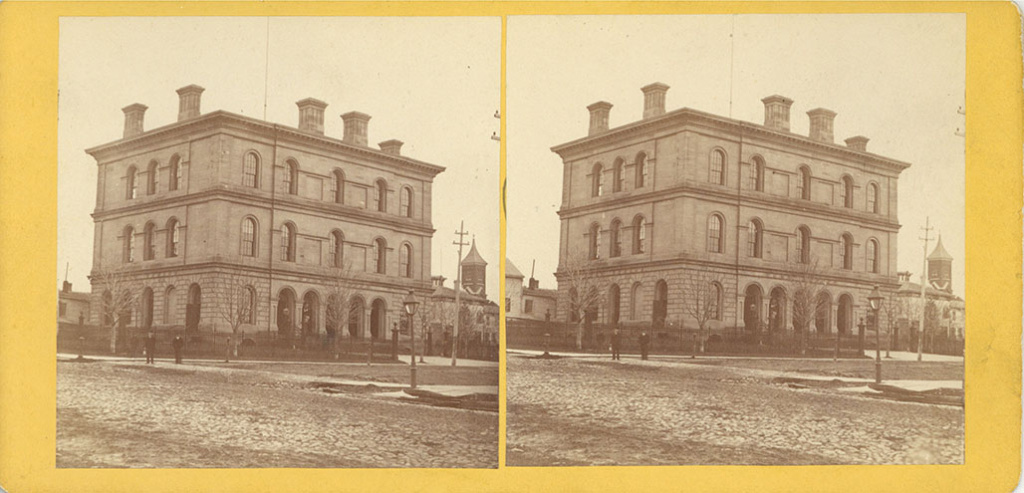
Author: Jacob Maloney, Oswego County Historical Society Museum Assistant
A once-in-a-century event took place earlier this year, the City of Oswego’s zip code, 13126, aligned with the date! The City planned several special events, themed promotions, community engagement opportunities that included an open house at the Richardson-Bates House Museum. But where does our zip code come from? Why do we even have them? Most people don’t think twice about adding the zip code to their address when writing physical mail or filling out information online. Zip codes are an important organizational system that helps the United States Postal Office help automate methods of sorting and make mail delivery more efficient (and cheaper) by using geographical data. The 13126 zip code covers a large area from Southeastern Oswego in the east to Dempster in the west. Minetto (13115) and New Haven (13121) are the smallest areas with individual zip codes in the county. There are roughly 30 unique zip codes throughout the county with a handful covering areas in multiple counties as well. According to USPS statistics from 2011, they deliver forty percent of the world’s mail to five percent of the world’s population!1
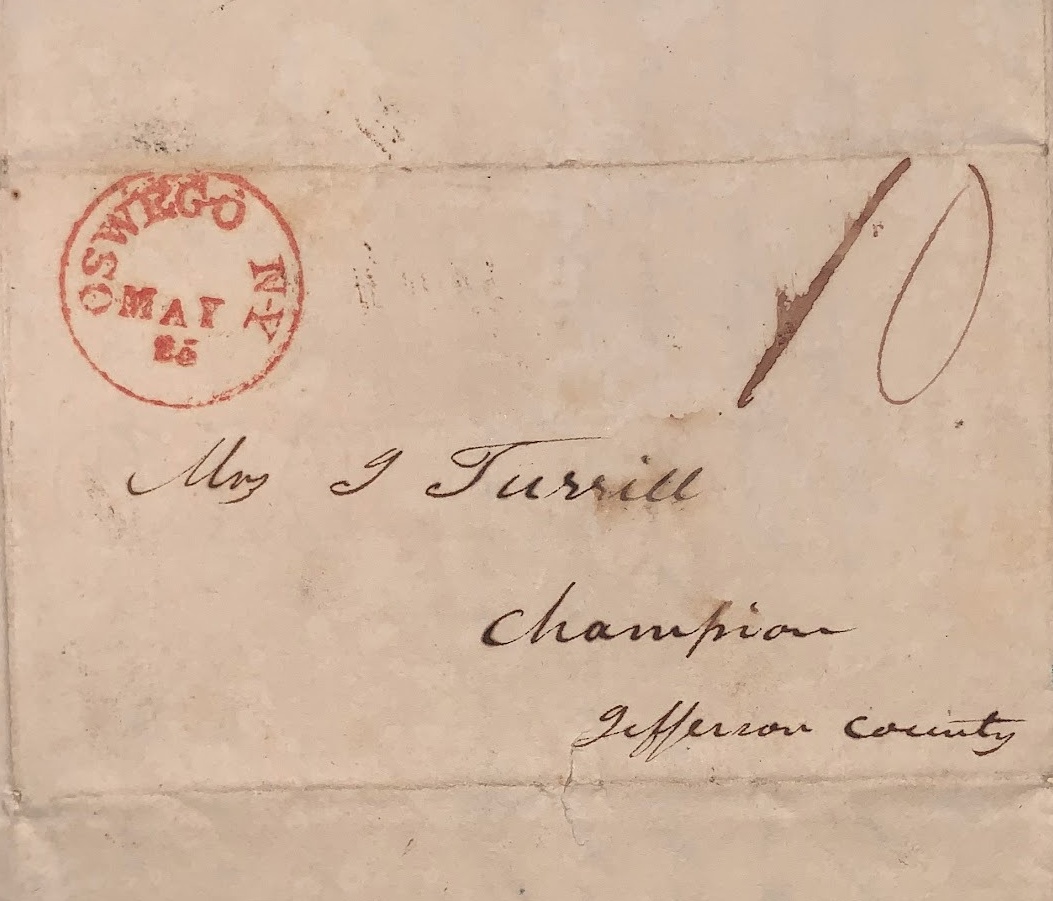
An examination of letters and postcards in the Oswego County Historical Society collection displays the changes in physical communication from the late 18th century to the 20th century. The museum has several letters written in the late 18th century by Oswegonians as well as other prominent New Yorkers including Founding Father John Laurance (which is included in an exhibit being done for America 250 this Fall). Letters like these and well into the 19th century were folded pieces of paper with their name, town or city and county written on the exterior. This letter to Joel Turrill2, an Oswego politician who served in the House of Representatives and eventually the US Consulate to the Kingdom of Hawaii in the mid-19th century, shows the addition of a postmark confirming its arrival to their office. Physical mail receives the similar postmarks today and standardized postage stamps were introduced nationally (5 & 10 cents) in the 1840s but were not mandatory until 1855.3
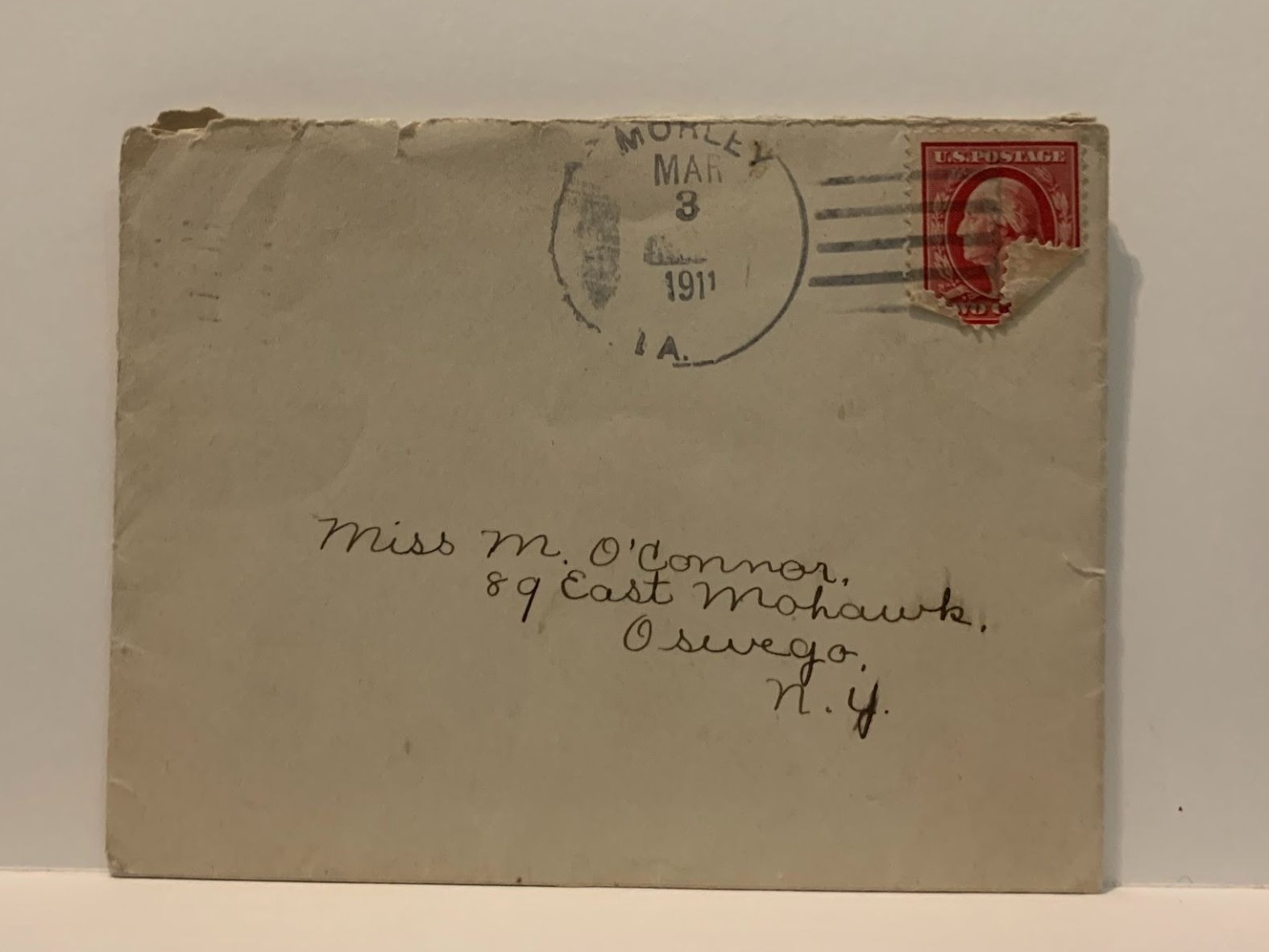
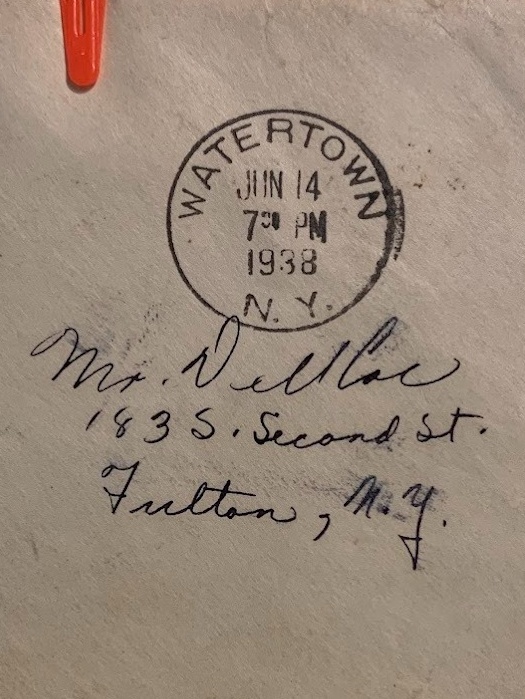
Standardization of mail and postage continued and the new methods of mail delivery were introduced. In the late 19th and beginning of the 20th centuries, people could have mail delivered straight to their homes or businesses if a street address was written on the envelope instead of having to go to their nearest postal office. This was first tested in major cities and eventually in more rural areas like the towns and villages in Oswego County. The envelope below was a letter written by Miss Elizabeth Bates (Norman and Florence’s daughter) to Miss O’Connor in March 1911. Another letter from 1938 demonstrates the addition of time and date stamp from the postal office. This particular letter was sent from Loretta Cooper in Watertown to “Del” Coe, which passed through the post office on June 14th at 7 pm.4 Notice the changes in these letters compared to Turrills- George Washington 5 cent stamp, postmark now includes the year, and street address and now the city + state, not just the county. Letter addressing remained virtually the same (unless you were in major cities where a two number code system was used).5
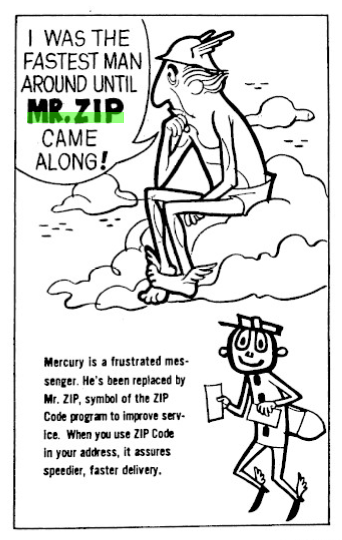
On July 1st 1963, the Zone Improvement Plan (ZIP) was implemented nationwide. The initial plan for this actually originated in the 1940s but took 20 years to become in effect nationally. Mail was filtered through hand sorting and local addresses but a sharp increase in mailing usage during and after World War II sparked better ways to handle such an influx. In 1943, they started implementing a 2 digit code, the Local Zone System, only in major cities but did not make it a requirement. In the following year, a Philadelphia Postal Inspector named Robert Moon proposed sectional center codes with 3 digits. By 1963, the local zone and sectional zone were combined into a 5 digit code that we know today. In tandem, the Nationwide Improved Mail Service standardized the physical dimensions of envelopes and size limitations for packages in 1961. During the 1960s and 1970s, the postal service successfully campaigned to convince the American public to support their new system and implement it. A mascot named “Mr. Zip” was created in the mid 1960s as a visual promotion.6
Our day to day systems of efficiency and organization are constantly evolving and the zip code is one that is under appreciated. The next time you write a letter or postcard, think about the systems in place that helped you send or receive it! We’ll see for the next zip code day in January 2126!
Endnotes:
- “The Untold Story of the Zip Code.” 2013. RARC-WP-13-006. Office of Inspector General United States Postal Service. https://www.uspsoig.gov/sites/default/files/reports/2023-01/rarc-wp-13-006_0.pdf. ↩︎
- 2025.03.46; Letter, Joel Turrill to Mary Turrill, May 25, 1831 ↩︎
- https://about.usps.com/who/profile/history/stamps-postcards.htm ↩︎
- The Envelope is from the Richardson-Bates Family Collection; The Letter is 2025.203; Coe Family Correspondence Collection; Letter from Loretta Cooper to her father Del Coe in June 1938.
↩︎ - “The Untold Story of the Zip Code.” ↩︎
- An early Mr. Zip advertisement; (Newspaper Ad in the The Brighton-Pittsford Post, 2 December 1965 on NYS Historic Newspapers.)
↩︎
